Viscosity Chart
A comprehensive reference for comparing viscosity values across different measurement scales including ISO VG, SAE, AGMA, and Kinematic/Saybolt measurements.
How to Use This Chart
Finding Equivalent Grades
To find equivalent grades across different systems, locate your known grade in one column and move horizontally across the chart to find corresponding values in other measurement systems.
For example, an ISO VG 68 oil corresponds to AGMA Grade 2, and falls within the SAE 20 crankcase range and SAE 80W gear oil range.
Multi-Grade Oils
Multi-grade oils (like 15W-40) span a range of viscosities. The first number (15W) indicates cold-temperature viscosity, while the second number (40) indicates operating-temperature viscosity.
This allows the oil to flow easily when cold for quick starts while maintaining adequate protection at operating temperatures.
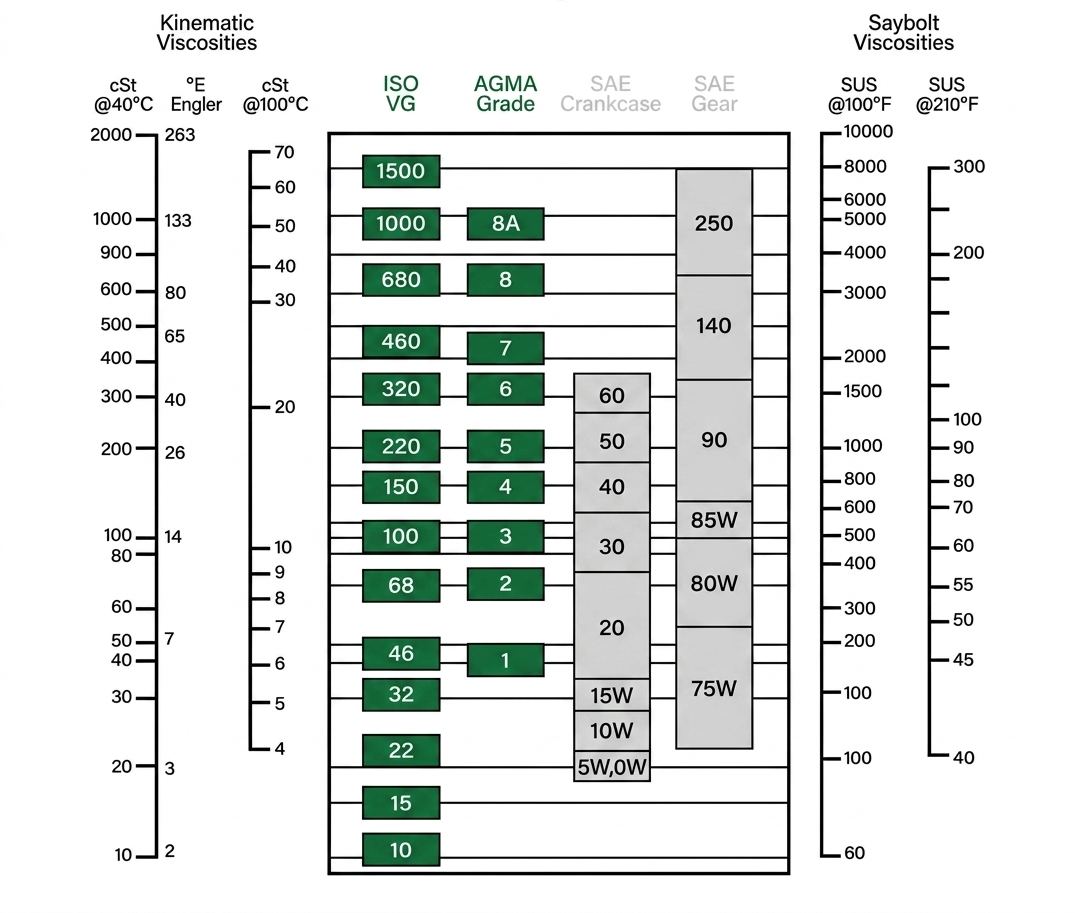
Understanding the Scales
Measures how easily oil flows under gravity. Lower numbers = thinner oil, higher numbers = thicker oil.
Centistokes at 40°C - Standard industrial measurement temperature
Engler degrees - European viscosity measurement
Centistokes at 100°C - Operating temperature measurement
Standard classifications used by different industries to specify lubricant thickness.
International Standards Organization Viscosity Grade - Used for industrial lubricants
American Gear Manufacturers Association - For industrial gear sets
Society of Automotive Engineers - For engine oils (0W-40, 15W-40, etc.)
Society of Automotive Engineers - For automotive gear oils (75W-90, etc.)
Older US measurement system still used in some specifications. SUS = Saybolt Universal Seconds.
Saybolt Universal Seconds at 100°F
Saybolt Universal Seconds at 210°F
Related Resources
Oil Analysis Services
Get detailed analysis of your lubricants to ensure optimal performance and identify potential issues.
Drain Interval Calculator
Calculate optimal oil change intervals based on your equipment and operating conditions.
Talk to an Expert
Need help selecting the right lubricant? Our technical team is here to assist you.